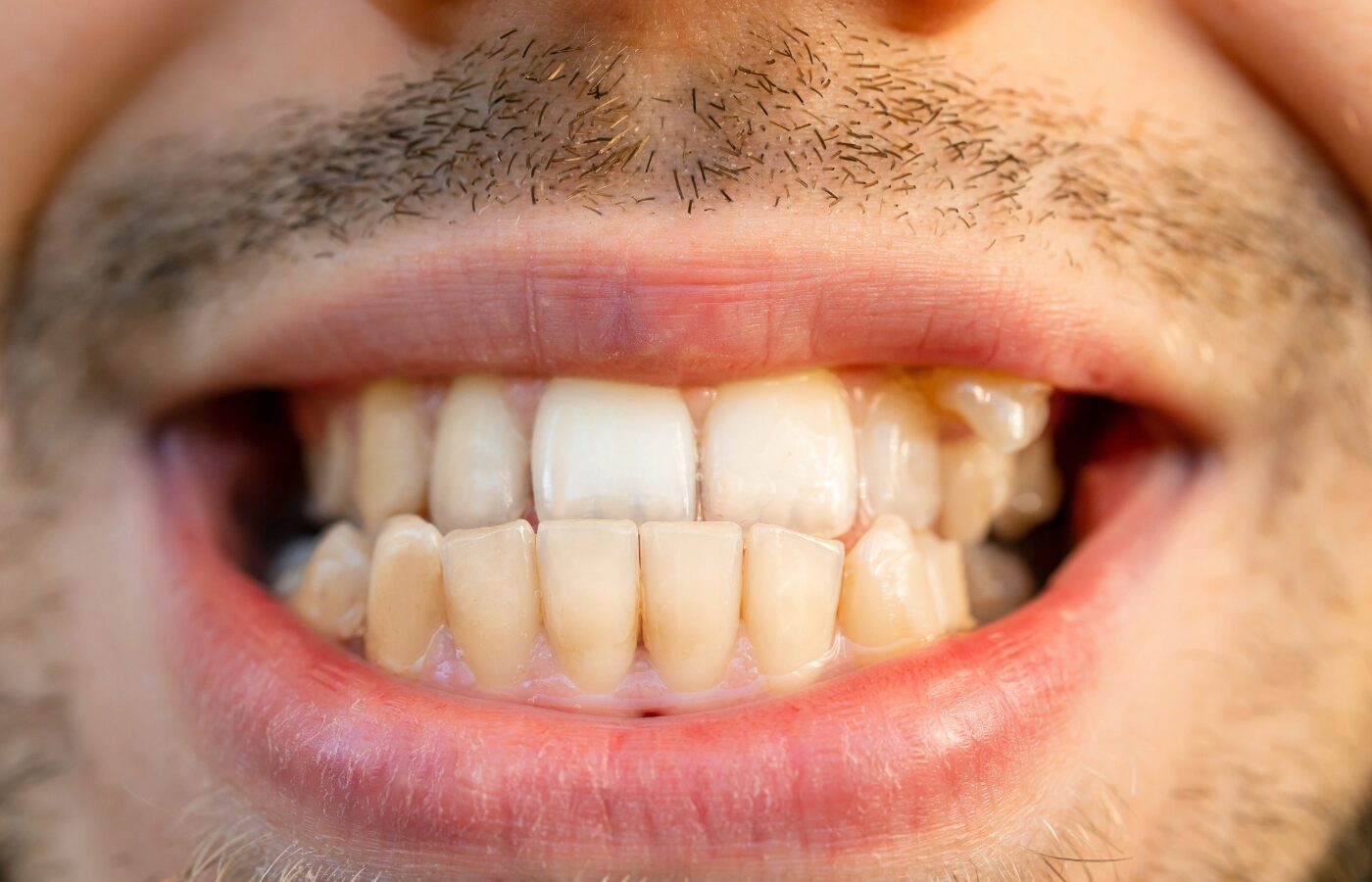
When you have a crossbite (that is, when one or more of your upper and lower teeth don’t align properly), you are not just dealing with a dental issue. The misalignment turns into tension, and tension triggers compensation. In other words: crossbite = tension, tension = compensation.
That compensation isn’t limited to your jaw. Because your bite influences how your jaws, facial muscles, neck, ribcage, and spine all balance, a crossbite can pull your system out of alignment. Things shift: your pelvis, thorax, cervical and lumbar spine may all tilt, your head may move forward, your neck and facial muscles tighten, and breathing patterns become compromised.
Why Bite Matters to Your Whole-Body Alignment
Research shows that individuals with a unilateral posterior crossbite exhibit altered body posture compared with those without. For example, one study found significant differences in horizontal alignment at the shoulder and pelvis levels in young adults with unilateral crossbite.
What this means is that the misaligned bite forces a shift in how your body holds itself: the muscles and fascia compensate, your left/right balance is disrupted, and your breathing and posture suffer.How the Ripple Effects Show Up
- Forward head posture: increases strain on neck and facial muscles and pulls you out of cervical and thoracic spine alignment.
- Ribcage and thorax instability: your rib cage may rotate or elevate on one side, altering breathing mechanics.
- Pelvis and lumbar spine shifts: to accommodate upper-body imbalance, the pelvis may tilt or rotate, while lumbar spine curves deepen or flatten.
- Airway and breathing dysfunction when your bite is off, tongue posture, orofacial muscle tone, and airway patency may be compromised—leading to mouth breathing and inefficient breathing patterns.
- Chronic pain, headaches, and nervous system issues: ongoing tension and compensation can cause muscular fatigue, trigger-point formation, and persistent pain.
Integrative Strategies for Addressing Crossbite and Its Effects
At Santa Teresa Smiles, we treat patients with an integrative and biorejuvenation mindset. Our approach goes beyond simply correcting the bite—we aim to restore balance, breathing, posture, and nervous-system regulation. Here are key strategies:
Airway-Focused Dentistry
We evaluate the bite in the context of airway, tongue posture, nasal or oral breathing, arch width, and skeletal relationships. The goal isn’t only to align teeth but to fix the root cause in order to improve how you breathe, how your maxilla and mandible function, and how your body responds.
Myofascial and Craniosacral Therapy
Once the bite imbalance creates tension throughout the musculature and fascia, specialized manual therapies help release these compensation patterns. Craniosacral therapy aligns cranial, cervical, and sacral structures; myofascial release addresses stiff fascia and muscle chains that hold tension.
Postural Restoration and Neuromuscular Integration
Because a crossbite throws off left/right symmetry and spinal relationships, postural restoration focuses on balanced alignment, symmetrical breathing, and neuromuscular re-education—essential for long-term stability.
Long-Term Monitoring and Maintenance
Treating a crossbite is not a one-time event. Ensuring the airway remains open, tongue posture optimal, breathing nasal, and posture balanced requires ongoing evaluation and care.
Bringing It All Together
A crossbite might seem like “just” an orthodontic concern, but as we’ve seen, it influences far more: tension, compensation, and global imbalance. With an integrative, airway- and posture-aware approach, you can correct the bite and restore systemic harmony that supports long-term wellness, pain reduction, and rejuvenation.
If you’re ready to explore how your bite may be affecting your body, breathing, and posture and begin an integrative plan that includes airway assessment, manual bodywork, and postural restoration. Dr. Noha Oushy and Santa Teresa Smiles is here to help you take that next step.