
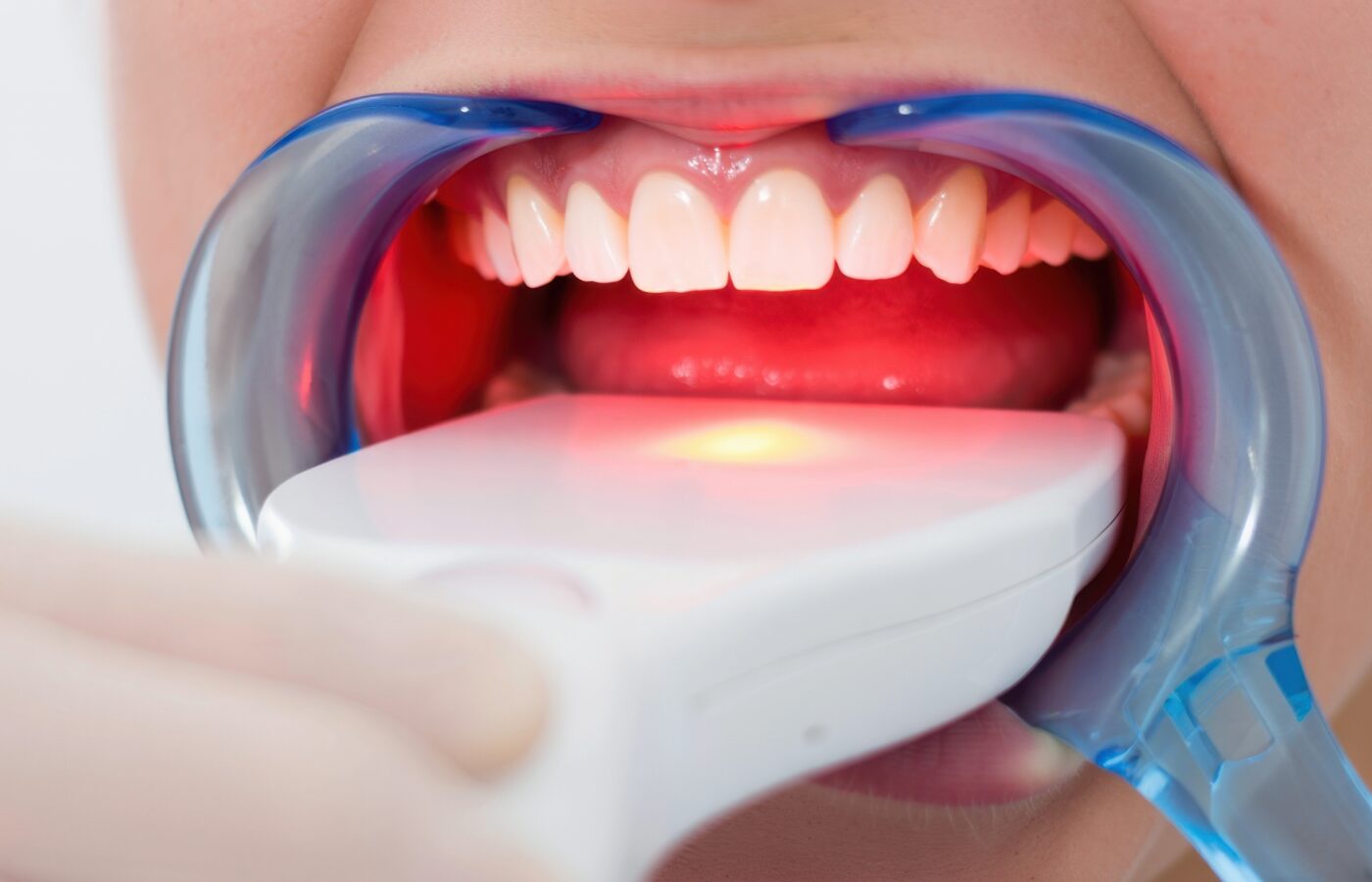
At Santa Teresa Smiles, Dr. Noha Oushy and our team are dedicated to providing care that supports the body’s natural healing processes. One of the advanced technologies we use to accomplish this is photobiomodulation therapy—a gentle, light-based treatment that helps reduce pain, accelerate healing, and decrease inflammation in dental care.
Also known as low-level laser therapy (LLLT) or red light therapy, photobiomodulation in dentistry uses specific wavelengths of light to stimulate cellular activity. This non-invasive technique has been used for decades in medical and dental settings to promote faster recovery and better outcomes for patients.
What Is Photobiomodulation?
Photobiomodulation (PBM) involves the use of light-emitting diodes (LEDs) or soft lasers that deliver red or near-infrared light to tissues. These wavelengths penetrate the surface of the skin or oral tissues and interact with mitochondria—the “powerhouses” of the cell. The light energy boosts the cells’ production of ATP (adenosine triphosphate), which fuels repair, regeneration, and reduced inflammation.
Unlike surgical lasers, PBM, does not cut or heat tissue. Instead, it gently stimulates your body’s natural biological responses. The result? Improved blood flow, reduced swelling, and faster healing—without the need for medications or invasive procedures.
Benefits of Photobiomodulation in Dentistry
PBM has a wide range of uses in dentistry because of its ability to enhance healing and comfort. Here are some of the ways it benefits patients:
- Reduces pain and inflammation: PBM can help manage post-procedure discomfort, jaw pain, and inflammation in tissues surrounding the teeth and gums.
- Accelerates wound healing: After extractions, implant placements, or soft-tissue surgeries, PBM encourages faster tissue repair and reduces the risk of infection.
- Supports tissue regeneration: It promotes collagen formation and new cell growth, aiding recovery in both hard and soft oral tissues.
- Eases TMJ discomfort: PBM therapy can reduce muscle tension and joint pain associated with temporomandibular joint (TMJ) disorders.
- Helps manage oral lesions: PBM is used to treat aphthous ulcers, cold sores, and mucositis, bringing relief and speeding healing without the use of drugs.
- Improves post-orthodontic comfort: Light therapy can ease soreness after orthodontic adjustments by reducing inflammation and aiding tissue adaptation.
Because it supports natural healing, PBM therapy is a favorite among patients seeking gentle yet effective care—especially those who are sensitive to medications or want to avoid unnecessary interventions.
The Science Behind the Light
The benefits of photobiomodulation are backed by extensive research. Studies show that exposure to specific wavelengths of light (usually between 600–1000 nm) increases cellular metabolism, improves oxygen utilization, and enhances microcirculation. These effects combine to reduce oxidative stress and stimulate faster repair of damaged cells and tissues.
For example, research published in the National Library of Medicine found that photobiomodulation significantly reduced postoperative pain and inflammation in dental implant patients. Another study in Frontiers in Physics demonstrated PBM’s ability to accelerate healing by enhancing mitochondrial energy production and cellular communication.
This growing body of evidence supports what patients at Santa Teresa Smiles often experience firsthand—faster recovery, less discomfort, and healthier outcomes after dental procedures.
How Photobiomodulation Fits into Integrative Dental Care
As part of our integrative and biological approach to dentistry, PBM allows us to care for both the teeth and the tissues that support them. We use this therapy to complement procedures such as extractions, periodontal therapy, and restorative treatments. It can also be helpful for patients with chronic oral inflammation or those recovering from long-standing dental issues.
Photobiomodulation is painless, quick, and safe for patients of all ages. Most treatments take just a few minutes and can be performed during or after a dental procedure. The effects are cumulative, meaning regular use over time can yield even greater improvements in healing and comfort.
Is Photobiomodulation Right for You?
If you experience frequent jaw pain, slow healing, gum inflammation, or sensitivity after dental work, PBM therapy may offer the gentle relief you need. Because it’s drug-free and non-invasive, it’s an excellent option for patients looking for natural ways to improve their oral and overall wellness.
At Santa Teresa Smiles, we tailor each PBM treatment to your individual needs and integrate it seamlessly with your overall dental plan. Our goal is to help your body heal efficiently, reduce discomfort, and support long-term oral health.
To learn more about how photobiomodulation in dentistry can support your healing and comfort, contact Santa Teresa Smiles and Dr. Noha Oushy today.
CONTACT US